

UAE branch firewall decision workspace
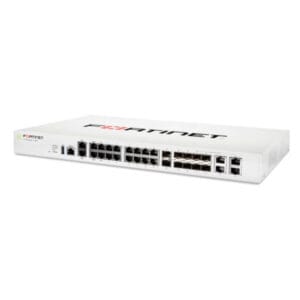
Fortinet FortiGate 80F-DSL in UAE
A compact FortiGate with an embedded xDSL module for organisations that need branch security and compatible VDSL2 or ADSL connectivity in the same appliance.
The most important buying question is not simply whether the 80F platform is fast enough. It is whether the exact FG-80F-DSL interface, DSL annex, service bundle, inspection load and support term match the UAE site that will use it. This page separates verified model facts from design choices so procurement and technical teams can prepare an accurate quotation.
Exact identity
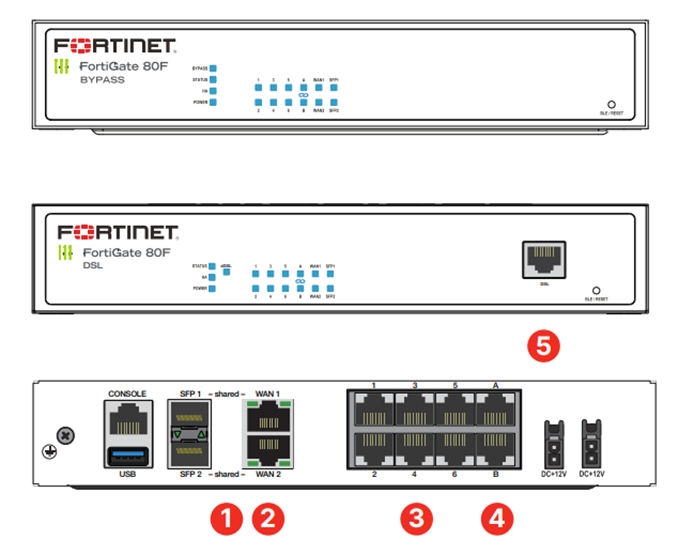
FortiGate 80F-DSL, ordering SKU FG-80F-DSL, with one embedded DSL RJ11 interface.
Likely role
A branch or midsize-site NGFW and SD-WAN edge where compatible DSL access is operationally useful.
Main dependency
Line mode, annex, ISP handoff, inspected traffic and licensed services must all be validated.
Next action
Send FourTeck the circuit, traffic, user, VPN, term and implementation details listed below.
What UAE buyers should know first
The FortiGate 80F-DSL is the DSL-equipped member of the FortiGate 80F family. It combines the FortiOS security and networking platform with an integrated xDSL modem interface, allowing a compatible copper broadband service to terminate directly on the firewall. That can reduce the number of edge devices at a branch, simplify WAN monitoring, or provide an additional path in a multi-link Secure SD-WAN design. It does not mean that every UAE DSL service will connect without verification. The carrier technology, annex, profile, authentication method, VLAN requirements and handoff policy still determine whether direct termination is appropriate.
Published performance values are useful for comparison, but they are not a site guarantee. The 80F family is rated up to 1.4 Gbps for IPS, 1 Gbps for NGFW and 900 Mbps for threat protection under defined Fortinet laboratory mixes. Real throughput can be lower when traffic is encrypted, sessions are numerous, full inspection is enabled, logs are exported, VPNs are active, or application behaviour differs from the test profile. A sound decision therefore combines the data-sheet values with the actual branch workload, licence bundle, FortiOS release and expected growth.
The operating problem this model is designed to address
Many branch networks have evolved in layers. A carrier modem provides the access circuit, a separate router handles WAN logic, a firewall applies policy, and another platform controls switching or wireless. That arrangement may be entirely valid, but it increases the number of devices to power, document, patch and troubleshoot. The 80F-DSL gives a design team another option: terminate a supported DSL service directly on a FortiGate while using the same appliance for firewall policy, routing, VPN, SD-WAN steering and security inspection.
The value is strongest where the DSL circuit is genuinely part of the target architecture. A UAE branch might use it as the primary connection at a smaller site, as a secondary path behind a faster Ethernet service, or as a temporary access method during a circuit transition. It can also be relevant when the organisation wants consistent FortiGate policy across locations but some sites still depend on copper access. The embedded module should not be treated as a reason to retain an unsuitable or undersized circuit. Internet quality, upload capacity, latency and carrier support can matter more to user experience than the presence of an integrated port.
Security requirements add another layer. A branch may need web filtering, intrusion prevention, malware inspection, application control, IPsec VPN, remote access, segmentation, logging and central management. These functions consume different resources and may require FortiGuard or FortiCare entitlements. A raw firewall figure of 10 Gbps does not describe the expected result when several security profiles are enabled. The appropriate reference is the secured traffic mix closest to the intended deployment, followed by a margin for peak periods and future change.
The 80F-DSL is consequently best evaluated as a combined edge platform, not merely as a modem with a firewall attached. The decision should consider circuit compatibility, security load, interface layout, resilience, operational ownership and subscription continuity together. FourTeck can help translate those inputs into an exact hardware and licence request, but the final architecture remains dependent on discovery.
Requirement canvas: information that changes the recommendation
A firewall cannot be sized accurately from employee count alone. The following variables affect whether the FG-80F-DSL is an efficient fit, a conditional fit, or the wrong platform for the project.
1. DSL service and annex
Confirm whether the line uses VDSL2, ADSL2, ADSL2+, G.DMT, T1.413 or G.Lite and which annex the provider expects. The current specification lists Annex A, B, I, J, M and L support. Carrier profile, encapsulation, authentication and VLAN settings must still be checked. A compatible protocol name alone does not guarantee service acceptance.
2. Internet and private-WAN capacity
Record committed and burst rates for every circuit, including downstream and upstream capacity. A branch with a modest DSL line may still generate heavy internal, VPN or inter-VLAN traffic. Conversely, a future high-speed fibre upgrade may make the embedded DSL feature secondary and shift attention to inspected throughput and Ethernet interface design.
3. Inspection profile
List the policies that will use IPS, anti-malware, web filtering, DNS security, application control, SSL inspection or other services. Full deep inspection of encrypted traffic is materially different from basic stateful firewalling. Published SSL-inspection and threat-protection figures provide a better planning reference than the largest firewall number.
4. Users, devices and sessions
Count laptops, phones, printers, cameras, payment devices, building systems, guest clients and IoT equipment, not only staff. Application behaviour and concurrent sessions often matter more than registered users. Cloud collaboration, software updates and many short-lived web connections can create a different load from a branch with predictable line-of-business traffic.
5. VPN design
Document site-to-site tunnels, remote-access users, encryption requirements, overlapping networks and expected VPN traffic. The platform publishes up to 6.5 Gbps IPsec throughput under its stated test method, but production VPN capacity depends on cipher suites, packet sizes, inspection, routing and the available WAN service.
6. Segmentation and access layer
Identify corporate, guest, voice, CCTV, server, management and operational-technology zones. The 80F-DSL provides six GE RJ45 internal ports and two GE RJ45 ports that default to FortiLink. Those FortiLink ports can be repurposed, but the final port map should be designed before purchase, especially when switches, VLAN trunks or direct-attached devices are involved.
7. Logging and management
Decide whether logs remain local for short-term troubleshooting, go to FortiAnalyzer, use a cloud service, or feed another security platform. The FG-80F-DSL has no internal SSD listed. Retention, reporting, incident investigation and central policy management may therefore affect the required subscriptions and external systems.
8. Growth and resilience
Consider new branches, faster circuits, additional security profiles, high availability and a three-to-five-year operating horizon. An appliance that meets today’s average traffic with little margin may be a poor investment. If uninterrupted service is critical, define dual circuits, power strategy, HA topology, spares, change windows and support expectations before finalising the bill of materials.
Verified evidence board for FG-80F-DSL
The following values reflect the FortiGate 80F Series data sheet dated 19 June 2026 and the July 2026 Fortinet product matrix. Performance figures are “up to” values obtained under specified test conditions. They should be used for comparison and initial sizing, not as a production guarantee.
| Evaluation field | Confirmed value | Buyer interpretation |
|---|---|---|
| Manufacturer / model | Fortinet FortiGate 80F-DSL / FG-80F-DSL | Specify the DSL suffix on every request; the standard 80F and other variants have different hardware. |
| Primary role | Desktop NGFW and Secure SD-WAN appliance with embedded DSL module | Appropriate for branch-edge evaluation where xDSL termination adds practical value. |
| Ethernet interfaces | 6 × GE RJ45 internal, 2 × GE RJ45 FortiLink default, 2 × GE RJ45/SFP shared media pairs | Map WAN, LAN, FortiLink and fibre requirements before ordering transceivers or switches. |
| DSL interface | 1 × RJ11 | The line mode, annex and provider configuration still require validation. |
| Supported xDSL modes | VDSL2, ADSL2, ADSL2+, G.DMT, T1.413 and G.Lite | Useful coverage, but not a substitute for confirming the carrier’s specific profile and handoff. |
| Supported annex types | A, B, I, J, M and L | Provide this information to the ISP or project team during compatibility review. |
| IPv4 firewall throughput | 10 / 10 / 7 Gbps for 1518 / 512 / 64-byte UDP | A raw packet-forwarding reference, not the expected result with full security inspection. |
| IPS throughput | 1.4 Gbps, enterprise mix | A more relevant checkpoint when intrusion prevention is broadly enabled. |
| NGFW throughput | 1 Gbps, enterprise mix | Measured with firewall, IPS and application control enabled under the stated test method. |
| Threat-protection throughput | 900 Mbps, enterprise mix | Measured with firewall, IPS, application control and malware protection enabled. |
| SSL inspection throughput | 715 Mbps, IPS and average HTTPS | Encrypted-traffic policy, cipher mix and certificate operations can materially affect results. |
| IPsec VPN throughput | 6.5 Gbps at 512 bytes, AES256-SHA256 test | Production VPN performance depends on encryption, routing, inspection and WAN capacity. |
| Sessions | 1.5 million concurrent TCP; 45,000 new TCP sessions per second | Session patterns should be reviewed for guest, cloud, IoT and high-connection applications. |
| Remote access reference | 950 Mbps SSL-VPN throughput; 200 recommended maximum concurrent tunnel-mode users | Confirm the supported remote-access method, FortiOS release and endpoint requirements for the project. |
| High availability | Active-active, active-passive and clustering listed | HA requires a complete design, compatible units, cabling, licensing and failure-path testing. |
| Local storage | No internal SSD listed | Plan external or cloud logging when retention and reporting are important. |
| Dimensions and weight | 60 × 216 × 178 mm; 1.39 kg | Confirm shelf, wall-mount, ventilation and cabling clearance at the site. |
| Power and acoustics | 12 V DC, 5 A; 28 W average / 31.6 W maximum; 24.14 dBA | Include the power adapter, UPS strategy and ventilation in deployment planning. |
| Operating environment | 0°C to 40°C; 10% to 90% non-condensing humidity | A cooled communications area is preferable to an exposed, dusty or heat-prone location. |
Reading the performance figures without oversizing or undersizing
The largest number on the data sheet is the IPv4 firewall throughput measured with UDP packets of specific sizes. It shows the packet-processing capability of the platform under a defined laboratory scenario. It does not represent the bandwidth a UAE branch will necessarily receive from its DSL circuit, nor does it predict performance after several security profiles, VPN encryption and log export are enabled. For a security-focused deployment, the IPS, NGFW, threat-protection and SSL-inspection figures are more useful planning anchors.
Suppose a branch has a 500 Mbps primary circuit, a DSL backup, substantial Microsoft 365 traffic, video meetings and web access that will be inspected. The 900 Mbps threat-protection figure may initially appear comfortable, but the design still needs to account for encrypted-traffic policy, bursts, software updates, guest access, VPN traffic and growth. If both WAN links may be active at the same time, aggregate demand matters. If the organisation expects a near-term move to a multi-gigabit service, a larger model may provide better lifecycle value even though the current DSL line is modest.
Session capacity also deserves context. The platform lists 1.5 million concurrent TCP sessions and 45,000 new TCP sessions per second. Most ordinary branches will operate far below those maximums, yet guest networks, cloud-heavy applications, large device populations and misbehaving endpoints can change the connection profile. Monitoring an existing firewall provides better evidence than estimating from employee count. Useful records include peak sessions, new-session rate, CPU and memory trends, top applications, inspected bandwidth and drops during busy periods.
A practical sizing rule is to define the secured traffic that the organisation intends to inspect, add realistic headroom and then verify that interface, VPN, logging and resilience needs also fit. FourTeck can review these inputs as part of quotation preparation. Final sizing should remain a design decision rather than a claim that one published figure guarantees a particular user count.
Embedded DSL: where the special variant changes the design
The embedded RJ11 interface is the defining difference between FG-80F-DSL and the standard FG-80F. It can reduce dependence on a separate modem when the carrier service is compatible and direct termination is approved. That creates a clearer operational view because the firewall can participate directly in link monitoring, routing and SD-WAN decisions. It may also simplify physical troubleshooting by reducing intermediary hardware. These benefits are conditional: the ISP must support the modem mode, annex, authentication and service profile used at the premises.
Compatibility work should begin with the circuit record, not with assumptions about the wall socket. Ask the provider or current network team for the exact access type, downstream and upstream rates, annex, VLAN tag, encapsulation, username or authentication method, public addressing, bridge requirements and any supplied modem policy. Some services are delivered through provider-managed equipment even when the underlying last mile is DSL. In those cases, the FortiGate may still connect by Ethernet rather than replacing the carrier device.
The DSL link can be used in several ways. It may carry all traffic at a small branch, serve as a lower-cost backup to Ethernet or fibre, or handle selected applications through Secure SD-WAN rules. Each approach has different implications. A backup link must be tested regularly and should have realistic application priorities because its upload speed may be significantly lower than the primary service. An active-active design needs performance-SLA checks, steering logic and a clear response when quality deteriorates without a full outage.
Do not assume that an embedded modem eliminates every demarcation device, splitter or carrier requirement. Cabling quality, line distance, local conditions and provider support remain external dependencies. The procurement dossier should state whether FourTeck is expected only to supply the appliance or also to assist with WAN configuration, ISP coordination, migration and failover testing.
How the 80F-DSL can fit into a branch architecture
At the WAN edge, the appliance can terminate the embedded DSL circuit and use the shared RJ45/SFP media pairs or Ethernet WAN ports for other connectivity. Shared media means the related RJ45 and SFP interfaces are alternatives within a pair rather than additional simultaneous ports. The design team should document which physical connector is active, the transceiver type if fibre is used, and how each link participates in routing or SD-WAN. Incorrect port assumptions can create avoidable bill-of-material changes during staging.
On the LAN side, six GE RJ45 internal ports can connect local networks or downstream switching. Two additional GE RJ45 interfaces default to FortiLink, which is Fortinet’s management and control connection for supported FortiSwitch deployments. These ports can be reconfigured as ordinary interfaces, but their intended role should be agreed early. A branch with multiple access switches, voice, CCTV, guest Wi-Fi and business systems will normally benefit from VLAN-based segmentation rather than connecting every zone directly to the firewall.
Wireless service is not integrated in FG-80F-DSL. The model is different from FortiWiFi variants. A project that needs wireless can use separate supported access points and, where appropriate, manage them through the FortiGate or another approved platform. Access-point count limits in the data sheet are platform maxima, not a recommendation to attach that many devices to every branch. Radio design, switch capacity, PoE, cabling, coverage, client density and management architecture must be sized separately.
For centralised operations, FortiManager may be considered for policy, configuration and workflow across multiple FortiGates, while FortiAnalyzer may be considered for log collection, analytics and reporting. Cloud alternatives may also exist depending on the selected entitlement. These products and services are not automatically included with a base hardware request. The number of sites, retention period, administrator model, change-control process and reporting expectations should guide the choice.
Identity and endpoint relationships can also influence policy. Directory integration, multi-factor authentication, FortiClient, certificates and device posture may support more precise access decisions, but each component has licensing, compatibility and implementation conditions. The firewall should not be expected to create a complete zero-trust architecture by itself. It can enforce important controls within a broader identity, endpoint, application and monitoring design.
Finally, a branch architecture should define failure behaviour. What happens when the DSL line degrades, the primary circuit fails, an upstream switch is unavailable or the firewall reboots? The answer may involve dual WAN, HA, redundant switching, UPS power, configuration backups, external logging and documented recovery steps. Product supply and implementation services should be quoted as distinct scope items so that responsibilities are clear.
Fit map: when to proceed and when to compare another option
Strong potential fit
Consider the FG-80F-DSL when a UAE branch has a confirmed compatible xDSL service, the secured traffic fits comfortably within the relevant performance range, Gigabit Ethernet interfaces are sufficient, and the organisation values a combined firewall and WAN-edge platform.
It is also attractive where a standard FortiGate operating model already exists and the DSL-equipped site needs consistent policy, VPN and management. The fit becomes stronger when the procurement team has a clear subscription term and the technical team has validated the carrier requirements.
Fit after requirement validation
Further analysis is needed when the site expects heavy SSL inspection, several active WAN links, large remote-access demand, extensive east-west segmentation, high log volume or rapid bandwidth growth. The model may still be appropriate, but sizing evidence should come from current traffic and policy data rather than a user-count estimate.
Validation is also essential when the ISP uses provider-managed equipment, the annex is unknown, the circuit may soon be replaced, or high availability is mandatory. These conditions do not rule out the product; they change what must be confirmed before quotation.
Consider another model or architecture
Compare a larger FortiGate when the secured throughput target approaches the published limits, multi-gigabit WAN is planned, more high-speed interfaces are required, local storage is important, or growth would leave little operating margin. Compare the standard 80F or a newer platform when DSL is not needed and another interface mix provides better value.
Use a provider modem plus Ethernet handoff when direct DSL termination is unsupported or operationally restricted. A separate design may also be preferable if the carrier owns troubleshooting up to its managed device.
Licensing, FortiCare and FortiGuard decisions
The hardware appliance and its service entitlements are separate commercial elements. A base unit provides the FortiGate platform, but many security services, updates, cloud capabilities and support benefits depend on the selected FortiCare or FortiGuard contract. The exact order should identify the hardware SKU, bundle or a-la-carte services, term and country of use. Describing the request only as “an 80F-DSL licence” is not precise enough for an accurate quotation.
Current 80F-series documentation presents Enterprise Protection, Unified Threat Protection, Advanced Threat Protection and SD-WAN-oriented bundle columns, together with individual services and FortiCare options. The included service set differs by bundle. Names and entitlements can change over time, and a capability shown at portfolio level is not automatically included in every SKU. FourTeck should therefore confirm the current ordering code rather than relying on an old renewal document or a neighbouring model’s bundle.
FortiCare relates to support and lifecycle services, while FortiGuard refers to security-service subscriptions such as intrusion prevention, anti-malware and filtering capabilities. Some base services are associated with an active FortiCare subscription. FortiCare Essentials, Premium and Elite have different support constructs, and the exact replacement, response or extended-support terms should be checked in the applicable contract. Product supply should not be described as including a specific support outcome until the entitlement is confirmed.
For a new purchase, align the subscription term with the organisation’s budgeting and lifecycle plan. A three-year or five-year term may simplify renewal administration, but the decision should consider planned circuit upgrades, model replacement, branch consolidation and support policy. For an existing device, prepare the serial number, current contract, expiry date, services in use, account context and desired term. Do not send passwords or private configuration data through a public enquiry.
Expiry does not have one universal effect. Base forwarding behaviour, security updates, cloud functions, support access and service availability can be affected differently depending on the entitlement and configuration. Renewal planning should be factual rather than alarm-driven. The important task is to identify which protections and operational processes rely on the current contract, then arrange continuity before the expiry date where possible.
The 80F family remains represented in Fortinet’s June and July 2026 official materials, but ordering status and lifecycle announcements should still be checked at the time of purchase. A current data sheet does not replace a formal lifecycle notice. FourTeck can help coordinate the exact SKU and term based on the information supplied.
Deployment track from discovery to handover
Buying the appliance and implementing the branch are related but separate scopes. The following sequence shows how a controlled project may be organised. The final quotation should state which activities are included, which are optional and which remain the customer’s responsibility.
- Discovery and evidence collection. Record the existing firewall, topology, circuits, DSL parameters, public IP addressing, VLANs, VPNs, identity sources, applications, security profiles, logging, change constraints and known faults. Capture performance trends from the current environment where possible. Discovery should also identify third-party dependencies such as ISP equipment, DNS, certificates, authentication services, cloud applications and remote branches.
- Model and licence confirmation. Compare the measured requirement with the 80F-DSL’s relevant secured-throughput figures, interfaces and growth margin. Confirm FG-80F-DSL rather than a standard, PoE, Wi-Fi or storage variant. Select the current FortiCare and FortiGuard bundle or individual services, term, quantity and regional ordering information. Include transceivers, mounting, spare power components or HA hardware only when the design requires them.
- Target design and bill of materials. Define WAN roles, DSL termination, Ethernet or SFP links, SD-WAN rules, routing, network zones, VLANs, FortiLink use, switch and access-point relationships, VPNs, management, logging and administrator access. Document assumptions and out-of-scope items. A diagram should show demarcation points so the project team knows which party owns each carrier or network component.
- Preparation and backup. Obtain approved access, maintenance windows and stakeholder contacts. Back up the existing firewall and relevant network devices, verify that backups can be retrieved, and record current addressing and policy behaviour. Prepare a rollback plan that identifies the conditions for reverting, the person authorised to make that decision and the time required to restore the former path.
- Staging and configuration. Register and update the appliance according to the agreed support and firmware policy. Configure management security, interfaces, routes, DNS, NTP, policies, security profiles, objects, VPNs, SD-WAN health checks and logging. DSL configuration should use carrier-confirmed parameters. Staging should avoid copying obsolete rules blindly; each migrated object and policy should have an identified business purpose.
- Controlled cutover. Connect the WAN and LAN paths in the approved sequence. Validate basic reachability before enabling broader policy. Test the DSL line, any primary Ethernet or fibre service, failover, DNS, critical applications, inbound services, VPNs, guest access and administrative access. Monitor CPU, memory, sessions, interface errors, security events and route selection during the change.
- Acceptance checks. Use a written checklist rather than relying on a general statement that “the internet works.” Confirm business applications, payment or voice systems where applicable, branch-to-head-office access, remote support, logging, alerts, policy enforcement and recovery behaviour. Record exceptions, temporary workarounds and follow-up owners.
- Documentation, handover and support planning. Provide an agreed configuration backup, topology, interface table, administrator procedure, licence record, renewal date, known limitations and escalation route. Explain which changes require approval and where logs are retained. Post-change observation, training, policy optimisation and managed support should be included only when explicitly scoped.
Use environments where the model may be considered
Single UAE office with compatible copper access
A professional office may use the embedded DSL line for internet access while the FortiGate applies segmentation, web policy, VPN and monitoring. The decision should account for upload speed, cloud collaboration, encrypted inspection and guest traffic. A small number of employees does not automatically make the model oversized or undersized; device count and application behaviour remain important.
Retail or service branch with dual WAN
A branch may use Ethernet or fibre as the main link and DSL as a secondary path. Secure SD-WAN can monitor quality and steer essential applications according to policy. The backup circuit should be tested under realistic load, and lower-priority traffic may need restriction during failover. Payment, voice and branch-to-head-office dependencies require explicit acceptance checks.
Warehouse or logistics location
Warehouses often combine handheld terminals, printers, cameras, guest devices, building systems and operational equipment. Segmentation and switch design may be more important than employee count. The 80F-DSL can be evaluated as the security edge, while wireless coverage, PoE capacity, environmental conditions and external logging are planned as separate requirements.
Clinic or customer-facing site
A clinic may need separate zones for staff, guests, medical or business devices and third-party support. The firewall can enforce network boundaries and secure remote connectivity, but it does not by itself create regulatory compliance. Identity, endpoint controls, data handling, logging, governance and documented operating procedures remain necessary.
Distributed FortiGate estate
An organisation with several FortiGate branches may choose the 80F-DSL to preserve a common operating model at a site with different access technology. Central management and analytics can improve consistency, but licensing, change control and administrator roles must be defined. Standard templates should still allow site-specific circuits, VLANs and business applications.
Temporary or transitional connectivity
The DSL interface may help during an office move, delayed circuit delivery or migration period. Temporary connectivity should still receive proper security policy, monitoring and expiry ownership. Confirm whether the embedded service will remain as backup after the transition, because that affects the final SD-WAN, support and documentation scope.
Procurement dossier for an accurate UAE quotation
Send the following details in one request where possible. Complete information reduces the risk of quoting the standard 80F, an unsuitable bundle or an incomplete implementation scope.
- Exact model: FortiGate 80F-DSL, FG-80F-DSL, or the current bundle SKU if already known.
- Quantity and topology: standalone units, HA pairs, spares and number of sites.
- DSL service: VDSL2 or ADSL mode, annex, provider, profile, authentication and VLAN details.
- Other WAN links: type, bandwidth, handoff, public addressing and intended priority.
- Traffic requirement: peak inspected throughput, encrypted traffic, application mix and growth estimate.
- User and device profile: staff, guests, endpoints, phones, printers, cameras and IoT systems.
- Security services: IPS, malware protection, filtering, application control, SSL inspection and other required functions.
- VPN scope: site-to-site peers, remote users, expected bandwidth and authentication method.
- LAN design: VLANs, switches, FortiLink, access points, PoE and direct-attached interfaces.
- Management and logging: FortiManager, FortiAnalyzer, cloud service or third-party platform requirements.
- Subscription term: one, three or five years and the desired support level.
- Accessories: SFP transceivers, mounting, power or other verified items.
- Existing environment: current firewall model, firmware, configuration complexity and migration objective.
- Project scope: supply only, remote staging, configuration, migration, testing, documentation or support.
- Delivery information: emirate, destination type, required date and site-access constraints.
- Commercial details: company name, quotation validity needs and VAT documentation requirements.
Do not include passwords, private keys, licence keys or unredacted sensitive configuration in an initial public enquiry.
UAE availability, pricing and delivery guidance
FortiGate pricing depends on more than the hardware name. The exact FG-80F-DSL unit, bundle, support level, subscription term, quantity, currency and commercial conditions all affect the quotation. A base appliance price cannot be compared fairly with a one-year or three-year security bundle. Ask for the ordering code and included entitlements to be shown clearly so procurement can compare like with like.
Current UAE availability and lead time must be confirmed at the time of enquiry. The 80F-DSL continues to appear in current 2026 Fortinet materials, but channel supply can vary by region, quantity and bundle. Do not schedule a migration solely from an online listing. Confirm the product, licence and accessories first, then agree a realistic delivery and implementation plan.
Delivery to Dubai, Abu Dhabi, Sharjah, Ajman, Ras Al Khaimah, Fujairah or Umm Al Quwain may require different destination and access details. Provide the full delivery location, receiving hours, contact person and any free-zone, building or site-security requirements. These details support accurate coordination without implying a fixed delivery time before stock and logistics are confirmed.
Installation and configuration are not automatically included with hardware supply. State whether the project needs remote staging, on-site work, ISP coordination, migration, testing, documentation or post-change support. The quotation should separate equipment, subscriptions and professional services so the organisation can see exactly what it is approving.
How FourTeck can assist
FourTeck can help review whether the requested identity is the DSL-equipped FG-80F-DSL, clarify the difference from standard, PoE, storage and FortiWiFi variants, and prepare a quotation around the confirmed licence term and UAE destination. Requirement review can include traffic, DSL, interface, VPN, logging, high-availability and growth inputs.
Where professional services are required, FourTeck can discuss a separate scope for staging, configuration, migration planning, policy review, VPN setup, SD-WAN, testing, documentation and handover. The final activities, location, access, change window and support expectations must be agreed before work is scheduled.
For company context, visit the FourTeck Fortinet UAE overview. For broader project options, review Fortinet services in the UAE. The Fortinet UAE product and solution hub provides the main route to related decisions.
Expert questions about FortiGate 80F-DSL
Is the FortiGate 80F-DSL the same as the standard FortiGate 80F?
No. Both belong to the 80F family and share the published platform performance, but FG-80F-DSL includes an embedded xDSL module and one RJ11 DSL port. The standard FG-80F does not. The DSL model also has different physical dimensions, power characteristics and feature details. Always include the full model suffix in the quotation request.
Which DSL services can the FG-80F-DSL support?
The current data sheet lists VDSL2, ADSL2, ADSL2+, G.DMT, T1.413 and G.Lite, with Annex A, B, I, J, M and L. Service compatibility still depends on the UAE provider’s line profile, authentication, encapsulation, VLAN and equipment policy. Confirm these details before assuming the firewall can replace a carrier modem.
What throughput should a buyer use for sizing?
Use the metric closest to the intended policy. The platform publishes up to 1.4 Gbps IPS, 1 Gbps NGFW, 900 Mbps threat protection and 715 Mbps SSL inspection, alongside a higher raw firewall figure. Actual results vary with encrypted traffic, packet size, security profiles, logging, VPN, firmware and application mix, so add operational headroom.
Does the FortiGate 80F-DSL include FortiGuard security services?
Not every hardware quotation includes the same services. FortiGuard capabilities and FortiCare support depend on the selected bundle or individual subscription, contract term and current ordering code. Ask for the quotation to identify the exact SKU, included services, support level and expiry date. Do not infer entitlement from the appliance name alone.
Can the FG-80F-DSL be used in high availability?
The series data sheet lists active-active, active-passive and clustering configurations. A production HA design requires matched hardware, correct ordering, licensing, heartbeat and data links, duplicated upstream and downstream paths, power planning and failure testing. Two firewalls do not automatically remove every single point of failure in the wider branch network.
Does the 80F-DSL have internal storage?
No internal SSD is listed for FG-80F-DSL. Organisations that need longer log retention, analytics, central reporting or incident investigation should plan an external or cloud logging destination such as an appropriately licensed FortiAnalyzer or other approved platform. Retention capacity, compliance needs and administrator workflow should be defined before purchase.
Can it manage FortiSwitch and FortiAP devices?
The 80F platform supports FortiLink and controller functions, and the data sheet publishes platform maxima for FortiSwitch and FortiAP connections. Those values are not a branch-design recommendation. Switch count, access-point density, PoE, VLANs, wireless coverage, firmware compatibility, management architecture and secured traffic should be assessed together.
Is the product suitable for a future fibre upgrade?
Possibly. The appliance has shared RJ45/SFP WAN media pairs and can use Ethernet-based services, so the DSL port does not have to remain the primary path. The key question is whether future secured throughput, interface speed and growth still fit the platform. A larger or newer model may offer better lifecycle value for a planned multi-gigabit upgrade.
What information is needed for a UAE price?
Provide the exact FG-80F-DSL identity, quantity, standalone or HA requirement, bundle, support level, one-, three- or five-year term, DSL details, accessories, delivery emirate and required services. Hardware-only and security-bundle prices are not directly comparable. Current availability, lead time, regional ordering code and commercial terms must be confirmed.
Can FourTeck configure and migrate the firewall?
FourTeck can discuss a professional-services scope for discovery, staging, configuration, migration planning, VPN, SD-WAN, testing, documentation and handover. The exact activities depend on the existing environment, access, change window, third-party systems and acceptance requirements. Product supply alone should not be assumed to include implementation or continuing support.
Decision close
The Fortinet FortiGate 80F-DSL is a credible candidate for a UAE branch that has a confirmed compatible DSL service and needs an integrated NGFW and SD-WAN edge. Its value comes from combining direct xDSL termination with FortiGate security, routing, VPN and management functions. The decision remains conditional on inspected traffic, line compatibility, interfaces, subscriptions, logging, resilience and growth.
Send FourTeck the exact circuit mode and annex, current and planned bandwidth, users and devices, required security profiles, VPN scope, bundle term, delivery destination and implementation expectation. These details allow the quotation to identify the right hardware, entitlement and service scope rather than simply attaching a price to a model name.
Reviews
There are no reviews yet.